
The NWQ Copper Project benefits from its proximity to both active and historical mines operated by prominent global companies such as Anglo American, Glencore, and Rio Tinto.
This Tier 1 region, approximately 150 km north of Mt Isa in Queensland, hosts several historic / currently operating copper mines including Lady Annie, Mt Oxide and Capricorn Copper. Extensive historical exploration has provided New Frontier with over 20 walk up targets, within its 977km2 tenure, including the major ‘Big One’ copper discovery.
The Big One Deposit is the most advanced prospect within the NWQ Copper project area , with a JORC compliant inferred Mineral Resource Estimate of 2.1Mt @ 1.1% Cu for 21,886kt copper metal.
Feb 2026 Exploration Target highlights potential for up to 473,600 tonnes of contained copper across 14 primary prospects, with a further 30 secondary prospects identified for follow-up exploration.
A recent surface sampling campaign was able to increase the priority copper target area which can enable a focused drilling campaign to be formulated and great potential for a strategic alignment with a development partner.

The NWQ tenure is strategically located within an active mining district and is surrounded by established operations and exploration assets held by major and mid-tier companies including Anglo American, Glencore, Rio Tinto and Fortescue Metals Group. The presence of these operators reflects the geological fertility of the district and supports a mature logistical and processing ecosystem.
Exploration to date has identified more than 40 copper targets across the NWQ landholding. Many of these remain under-explored and are considered prospective for structurally controlled copper mineralisation within favourable Proterozoic host sequences. The scale of the tenement package and target inventory provides multiple opportunities for systematic exploration and potential resource growth.
The project has advanced to align with a strategic partnership with Austral Resources Australia Ltd, owner of the Mt Kelly processing facility. This alignment provides a potential development pathway within an established regional processing hub and supports NFM’s strategy of advancing copper assets within a practical, infrastructure-supported framework.


The project area is positioned along the boundary between the Lawn Hill Platform and the Leichhardt River Fault Trough, a regionally significant tectono-stratigraphic corridor associated with Proterozoic copper mineralisation. The tenure is underlain by volcano-sedimentary sequences of the Surprise Creek and Gunpowder Formations, which host sediment-hosted and structurally controlled copper systems elsewhere in the district.
Copper mineralisation identified across the NWQ tenement package is predominantly associated with structurally controlled zones, including faulted and brecciated stratigraphy. The project is intersected by major regional structures including the Mount Gordon Fault Zone and the Dorman Fault Zone, both interpreted to have acted as pathways for mineralising fluids.
The Dorman Fault Zone is spatially associated with copper mineralisation at the nearby Mt Oxide copper deposit, providing a relevant structural analogue. In addition, the broader geological setting within the Mount Isa Inlier is recognised as prospective for iron oxide copper-gold (IOCG) style mineralisation.
The NWQ Copper Project is located within an active and highly competitive exploration corridor in the Mt Isa Copper Belt, part of the Mount Isa Inlier.
NFM’s tenure is surrounded by ground held by major and mid-tier operators including Glencore, Rio Tinto, Fortescue Metals Group and Anglo American, alongside active regional participants such as Austral Resources Australia Ltd.
The project area sits proximal to several established copper deposits and operations, including the Mt Oxide copper deposit, Capricorn Copper Mine and the Lady Annie copper operations. This concentration of operating mines and advanced projects demonstrates the fertility of the structural corridor that hosts NWQ.
The presence of these established producers and globally recognised explorers reflects continued industry confidence in the geological prospectivity of the district and supports the existence of regional infrastructure, processing capacity and skilled workforce.
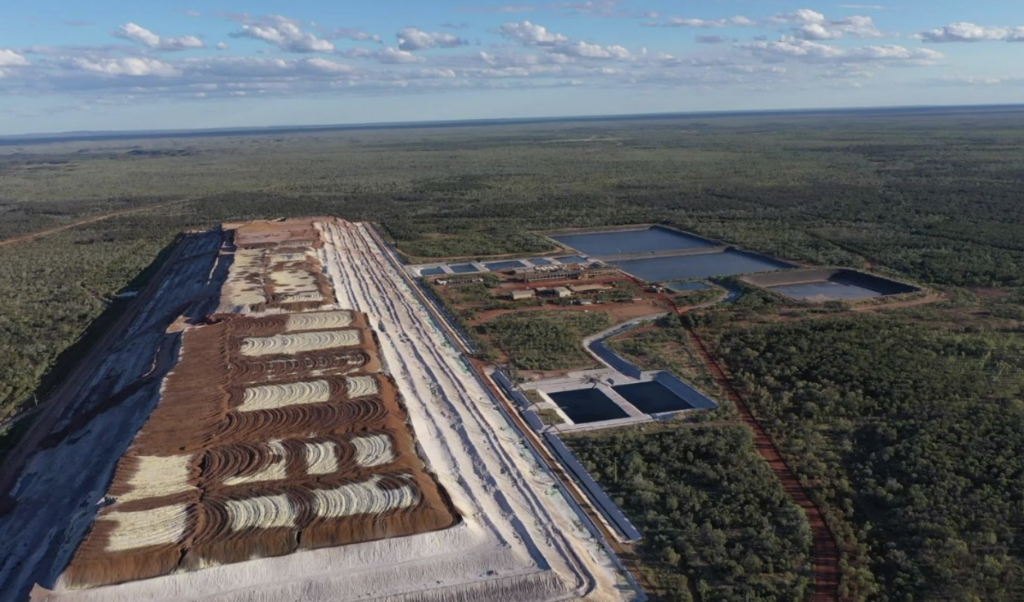

The Big One prospect, a recognised source of high-grade copper since mining activities commenced in 1914-15, has a rich history. Historical drill data reveals copper grades as high as 28.4% Cu.
In the early 1990s, an aerial geophysical survey identified a substantial sulphide anomaly, leading to the recommencement of small-scale mining operations in the mid-1990s. In 1997, 4,400 tonnes of supergene ore with an average copper grade of 3.5% was extracted. Shortly after, mining was again suspended due to falling commodity prices.
In 2021 and 2022 Castillo Copper conducted two drilling campaigns and an Induced Polarisation Survey, significantly expanding known mineralisation and confirming a substantial copper discovery.
Top intersects included:
The high-grade mineralisation zone, confined within a dyke, exhibits a more vertical dip than expected. Recent modelling of the 2021 and 2022 drilling campaigns produced a maiden JORC 2012 compliant Mineral Resource Estimate (MRE) of 2.1 million tonnes at 1.1% Cu.
A follow-up drilling campaign aims to extend known mineralisation and enhance confidence/grade of the current MRE. The underlying orebody, starting from the surface, remains undefined and open to the east, north, and down dip.

Mineralisation at Eldorado is interpreted to be structurally controlled, associated with faulted and brecciated host rocks within prospective Proterozoic stratigraphy. Historical exploration has identified copper anomalism and alteration consistent with hydrothermal fluid activity along regional structural corridors.
The Valparasia Prospect consists of copper mineralisation in two horizons over a 6km strike length. Previous explorers discovered rock chips with up to 2,530ppm Cu.
Reconciling geochemical data against the interaction of two intersecting faults suggests the presence of a structurally controlled copper system.
Located within the Mount Gordon Fault Zone, the Boomerang Prospect consists of outcropping copper oxide deposits, striking up to 800m. Boomerang has been the subject of a small scale, shallow historic drilling campaign, with deeper copper sulphide mineralisation potential untested.
Rock samples collected in September 2023 returned anomalous values up to 4590ppm Cu.
There is compelling evidence to support a systematic, prioritised follow-up surface sampling and geophysics campaigns to identify potential targets for drill-testing.
At the historic Mount Storm Prospect, a small-scale mining operation yielded approximately 700 metric tonnes of ore with a copper content of 7%.
Subsequent field investigations revealed the presence of copper and cobalt at the surface, with gold close by.
These findings suggest the possibility of a structurally controlled system associated with a porphyry dyke.
The Black Mountain Prospect comprises a copper anomaly, detected through stream sediment sampling and substantiated by signs of past mine workings.
Analysis of rock samples gathered from a ferro-manganiferous outcrop in 2021 revealed anomalous values, with copper reaching up to 940ppm Cu.
Additional rock sampling may be conducted to identify potential targets for drill-testing.
The Crescent Prospect shows promise for IOCG (Iron Oxide Copper Gold) deposits, supported by geochemical, geophysical and petrographic analysis.
Visible traces of gold and silver have also been found in the area. It is structurally controlled on the western side, with potential for IOCG-style mineralisation between faults and geophysical surveys have identified anomalies. Further on-ground investigation is merited.
The Pancake Prospect possesses Mount Isa style potential. Soil samples along an east-west trending anomalous zone delivered positive readings for zinc-lead-copper mineralisation.
As the geochemical data reconciles favourably with two sub-surface anomalies, identified with ground geophysics, they are targets for follow up drill-testing. Re-inspection and sampling of a 250m deep corehole stored in the Mount Isa Core Shed will deliver results with limited outlay.
The Wall Prospect is assessed to have the potential to host Mount Isa style mineral deposits. Soil geochemistry data reveals a zinc-lead-copper zone measuring approximately 400m by 225m, coinciding with an aerial electromagnetic anomaly.
Soil assay results retuned values of up to 7,163ppm Zn, 2,023ppm Pb and 1,464ppm Cu.
Additional rock or soil sampling has the potential to extend the area of known mineralisation.
At the Arya Prospect there is a significant magnetic anomaly, south of the drill-tested graphite system, which shows potential to be a primary source of copper mineralisation.
Further field work is recommended to determine the relationship between the structure and mineralisation, prior to a proof-of-concept campaign to drill-test the magnetic anomaly.
Note, any on-ground activity will require the establishment of an access track next to the Myally Creek, which will pose some challenges.
The Arya Prospect has a sizeable sulphide anomaly with IOCG potential. This bedrock conductor, which was discovered by an aero-electromagnetic survey in 2019, is 130m thick with dimensions of 1,500m by 450m. Outcropping copper mineralisation has also been found at surface.
A limited drilling campaign in late 2021, designed to test several large airborne electro-magnetic and ground resistivity anomalies, confirmed a low-grade (<2% total graphitic carbon) graphite system that won’t be further explored.
However, a sizeable magnetic anomaly – south of the known electro-magnetic anomalies – is interpreted to be associated with known surface copper and to a lesser degree silver.
A future site visit will assess if this anomaly should be drill-tested, as it may be a primary source of base metal mineralisation.
